

Südküste
Hinter mächtigen Wällen aus Korallenstein und Granit liegt an Sri Lankas Südküste das Galle Fort — eine perfekt erhaltene niederländische Kolonialstadt, ein UNESCO-Welterbe aus villengesäumten Gassen, Boutique-Cafés, Edelsteinhändlern und Galeriehöfen. Spazieren Sie zur goldenen Stunde über die Festungsmauern, vom Uhrturm bis zum weißen Leuchtturm, während sich die ganze Stadt zum Sonnenuntergang versammelt.
The moment you step through the gate into Galle Fort, the traffic noise of modern Sri Lanka falls away and four centuries of trade-route history close around you. First fortified by the Portuguese in the 16th century and massively rebuilt by the Dutch East India Company from 1649 onward, Galle is the largest surviving European-built fortified town in South Asia — so intact, so quietly lived-in, that UNESCO inscribed the whole fort as a World Heritage Site in 1988. This is not a museum with a ticket booth. Families still live behind the shuttered facades, kids play cricket on the rampart greens, and the courthouse, mosques and churches inside the walls all still do their daily work.
What makes Galle irresistible is the scale. The fort occupies a small peninsula you can wander end to end in twenty minutes, yet you can happily lose two days in it — trailing through lanes of frangipani and colonnaded verandahs, ducking into art galleries and antique shops, pausing for cinnamon iced coffee in a jungle courtyard, then climbing back onto the walls whenever the sea breeze calls.
The classic Galle experience costs nothing: a slow circuit of the ramparts, ideally beginning in the late afternoon. Start at the main gate beneath the old clock tower and walk the seaward walls past bastions with names like Star, Moon and Sun — the Dutch bolted their fortifications onto Portuguese foundations and built to last, using coral, granite and burnt lime. Pause at Flag Rock, the southernmost bastion, where local lads perform daring leaps into the swells below and ice-cream carts do a brisk trade as the sun drops into the Indian Ocean.
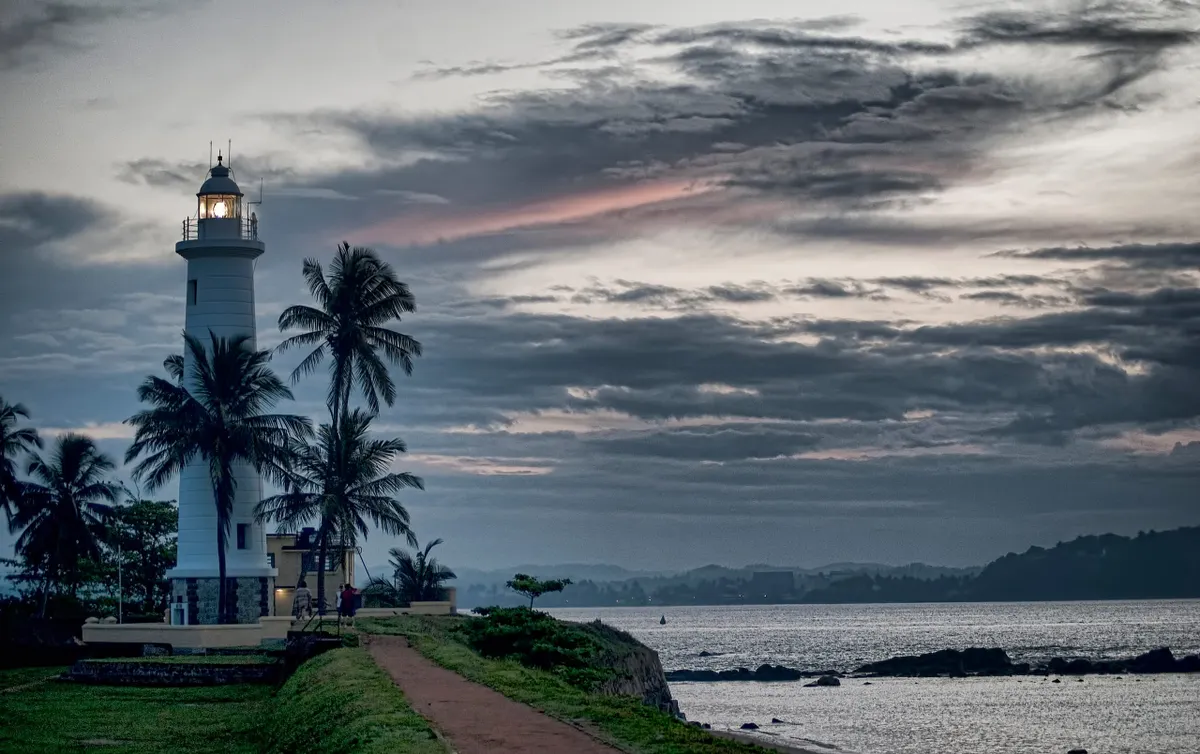
The circuit ends (or begins) at the fort’s most photographed corner: the slender white Galle Lighthouse, framed by coconut palms above a small crescent of beach. The current tower dates from 1939, but a light has guided ships into this harbour since 1848 — the oldest light station on the island, watching over a port that once received Arab, Chinese, Portuguese, Dutch and British traders in turn.
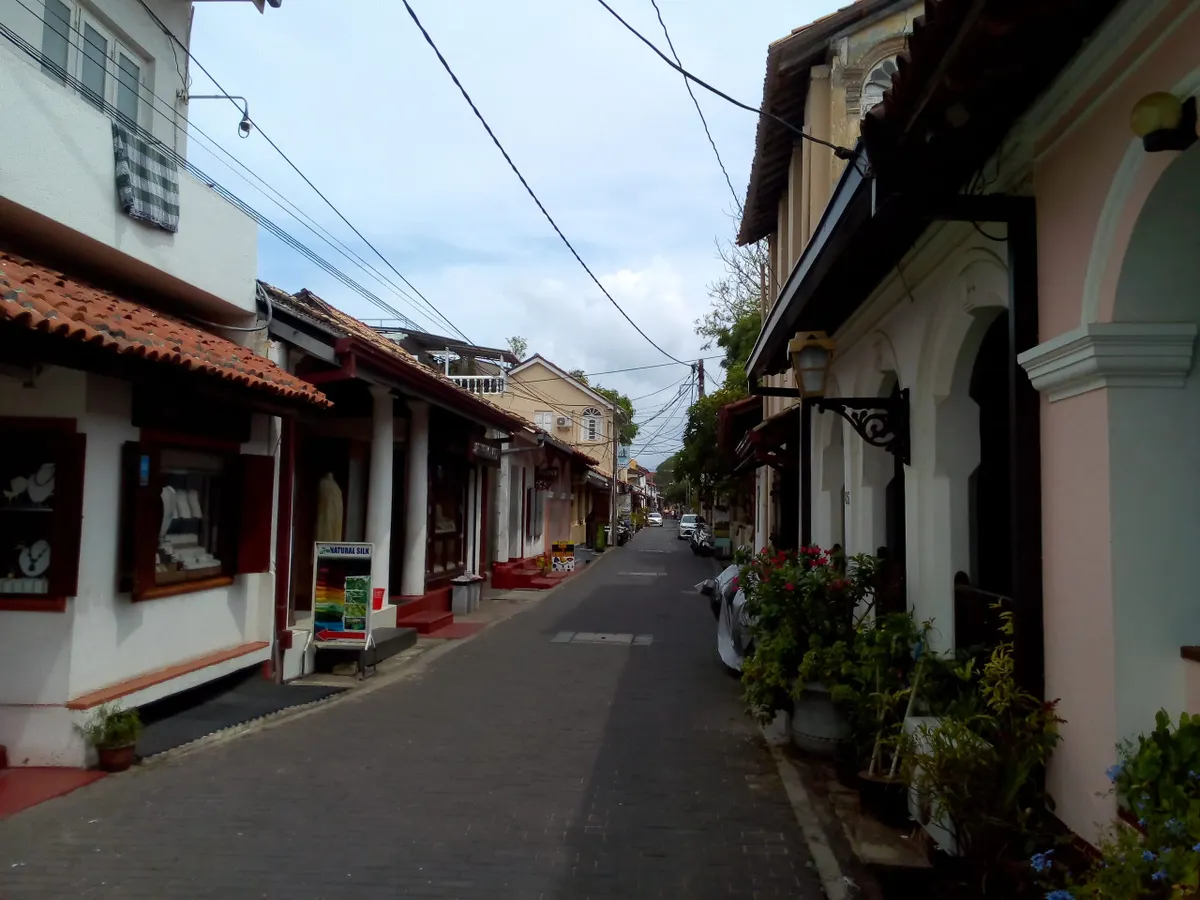
Inside the walls, the grid of streets laid out by the Dutch remains intact, and each has its own character. Pedlar Street and Church Street are the boutique heartland — jewellery ateliers working the sapphires for which Sri Lanka has been famous since antiquity, linen and homeware stores in restored merchant houses, bookshops, gelato counters and some of the best small hotels in the country. Look up as you walk: the details are the joy here, from monogrammed Dutch gables and British postboxes to the wooden louvres that keep the sea breeze moving through 300-year-old rooms.
Don’t miss the Dutch Reformed Church of 1755, floored with gravestones shipped from older cemeteries, or the Historical Mansion and maritime museum collections that trace the fort’s trading centuries. When the heat builds, do as Galle does: retreat to a courtyard café for the long lunch the town has quietly perfected.
Galle makes an ideal base for the south coast’s greatest hits. Ten minutes east, the banyan-shaded crescent of Unawatuna offers the swimming beach the fort itself lacks. Along the coast road toward Weligama and Mirissa — 40 minutes away, with its blue whales and surf — you’ll pass the famous stilt fishermen, perched on poles in the shallows in a tradition born of post-war ingenuity in the 1940s. These days the poles are as much photo opportunity as fishery; if you take pictures, a small tip to the fishermen is the fair custom. Inland, river safaris on the Koggala backwaters, cinnamon-peeling demonstrations and turtle hatcheries fill an easy half day.
Galle sits squarely in the southwest monsoon zone: the driest, brightest season runs from roughly December to April, which is also when the coast is liveliest — including the Galle Literary Festival, which draws writers and readers from around the world each January. From May to September the Yala monsoon brings heavier showers and rougher seas, though rain typically arrives in bursts rather than washouts, hotel rates soften, and the fort’s café life carries on regardless under the verandahs.
Galle closes out our 5-day Sri Lanka Short Escape, pairing a fort walk with the turtle hatchery and a mangrove boat ride — and it slots just as naturally onto the end of any island circuit.
Ready to walk the walls at sunset? Browse our tours or tell us your dates and we’ll build the south coast around you.
Journeys
Take one as it is, or ask your specialist to change it.

Leopards in Yala, blue whales off Mirissa, the blue train through tea country and sunset from Pidurangala Rock — eight days that pack Sri Lanka’s wildest moments into one beautifully paced private journey.
Sigiriya · Dambulla · Kandy · Nuwara Eliya · Ella · Yala National Park · Mirissa · Galle · Colombo

Eleven unhurried days through the island’s greatest hits: sunrise on Pidurangala, two nights in Kandy, tea country and the Ella train, a hike up Little Adam’s Peak, elephants at Udawalawe, whales off Mirissa and a slow beach finish at Bentota.
Sigiriya · Dambulla · Kandy · Nuwara Eliya · Ella · Udawalawe National Park · Mirissa · Galle · Bentota

Celebrate your love in the tropical paradise of Sri Lanka. Our tailor-made honeymoon is designed around your preferences and travel dates — sunrise over Sigiriya, high tea among the tea hills, the train to Ella, candlelit dinners and slow, sunlit days on the south coast.
Sigiriya · Dambulla · Kandy · Nuwara Eliya · Ella · Mirissa · Galle · Bentota

Five days, four unforgettable chapters: climb the Lion Rock at Sigiriya, walk into Dambulla’s golden cave temples, feel the drums of Kandy and finish on the palm-fringed south-west coast at Bentota and Galle Fort.
Sigiriya · Dambulla · Kandy · Bentota · Galle

Two weeks to see Sri Lanka in full: the ancient capitals of Anuradhapura and Polonnaruwa, Sigiriya at sunrise, sacred Kandy, the tea hills of Nuwara Eliya and Haputale, Ella’s bridges and waterfalls, two safaris, whales off Mirissa and the colonial streets of Galle.
Negombo · Sigiriya · Anuradhapura · Polonnaruwa · Dambulla · Kandy · Nuwara Eliya · Haputale · Ella · Yala National Park · Udawalawe National Park · Mirissa · Galle · Bentota · Colombo

Three weeks, the whole island: the south coast and its whales, Yala’s leopards, Ella and the high tea country, Horton Plains, Kandy, the ancient cities and the Minneriya elephants — ending with six slow nights on the white sands of Nilaveli and snorkelling at Pigeon Island.
Bentota · Galle · Mirissa · Yala National Park · Ella · Haputale · Nuwara Eliya · Horton Plains · Kandy · Dambulla · Sigiriya · Anuradhapura · Polonnaruwa · Minneriya National Park · Trincomalee · Negombo
Your specialist will build it into a private journey, with the right stays and the right pace.


